
By: Andrew Mack
A Superstar Arrives
When Major League Soccer and Inter Miami began recruiting Lionel Messi following Argentina’s 2022 World Cup triumph, the vision extended far beyond signing the greatest player of his generation. League executives recognized a unique opportunity to leverage Messi’s global popularity in the lead-up to the 2026 FIFA World Cup and elevate MLS’s standing among North America’s major sports leagues.
Messi’s arrival in the summer of 2023 had an immediate impact on viewership, fan engagement, and advertising revenue. Coinciding with his debut was MLS’s landmark partnership with Apple TV, which reportedly included a revenue-sharing agreement that allowed Messi to benefit from subscriptions driven by MLS content. The combination of the sport’s biggest star and a new global streaming platform generated unprecedented attention for the league. As The Athletic reported, “Messi’s jerseys are selling out. Apple announced that three games the week of Messi’s debut set records in viewership. Social media numbers are through the roof.” The quote illustrates just how much a single superstar can transform the perception and reach of an entire league.
While Messi’s presence directly benefited Inter Miami on the field, its influence extended across MLS. Derek Aframe, an executive at sports and entertainment marketing agency Octagon, noted, “I think the halo effect of him and what it means for the entire football ecosystem is key. Anyone in some form or fashion is going to benefit from his presence.” The league’s gamble had paid off. Messi’s introduction generated exactly the kind of momentum MLS had envisioned, positioning the league perfectly as excitement for the 2026 World Cup began to build on American soil.
Turning World Cup Momentum Into MLS Growth
With the World Cup approaching and interest in soccer at an all-time high, MLS faced an important challenge: capitalizing on its newfound popularity.
When Apple TV became the league’s exclusive media partner in 2023, matches were largely placed behind an additional subscription paywall. While dedicated supporters and Messi fans were willing to pay for access, casual viewers faced a significant barrier to entry. Recognizing the opportunity presented by the World Cup, MLS and Apple adjusted their strategy and expanded access to league broadcasts.
The move proved successful. According to MLS, the league averaged 7.9 million live match viewers per week across streaming and linear platforms through the first three months of the 2026 season, representing a 62% increase year-over-year. The surge in viewership created significant opportunities for sponsors and advertisers eager to capitalize on soccer’s growing audience in North America.
Sports Business Journal reported double-digit year-over-year growth in MLS sponsorship revenue, reflecting widespread confidence in the league’s trajectory. As one sponsor explained, “This is our moment. We believed in this sport from the get-go. We know that it’s going to be on a global stage, and we want to make sure that everybody knows that we’ve been here and we will continue to be here.” The heightened attention surrounding the World Cup culminated with Messi leading Argentina on another deep tournament run, placing MLS in front of a global audience. Although Argentina ultimately fell short of becoming just the third nation to win back-to-back World Cups, both MLS and American soccer emerged as major beneficiaries.
With soccer dominating headlines and public attention, league viewership continued to climb, with ratings reportedly increasing another 40–50% following the World Cup Final.
The Philadelphia Union’s Moment
As MLS continued to capitalize on growing interest driven by Messi and the World Cup, the Philadelphia Union found themselves moving in the opposite direction on the field. Following significant roster turnover after their Supporters’ Shield-winning campaign, the Union entered the World Cup break near the bottom of the table with only one victory in fifteen matches.
The break, however, provided an opportunity to regroup.
Key contributors returned to the squad, including all-time assist leader Kai Wagner after his spell with Birmingham City, creative midfielder Quinn Sullivan following an ACL injury, and promising 6-foot-7 defender Neil Pierre after his time with Danish club Lyngby. The emergence of 16-year-old phenom Cavan Sullivan also provided an exciting boost for the club’s future. Just as importantly, Philadelphia made a coaching change, dismissing Bradley Carnell and appointing Ryan Richter as interim manager. The impact was immediate. The Union rediscovered their form and entered a marquee home matchup against Inter Miami riding a four-game league winning streak.
Messi Comes to Philadelphia
The fixture represented more than just another regular-season match. It was an opportunity for Philadelphia fans to watch Lionel Messi in person.
The excitement surrounding his visit was evident throughout the city. As reported by 6ABC Philadelphia, one supporter admitted, “I’m only here to see Messi,” while another remarked, “He’s the G.O.A.T., but that doesn’t mean we don’t want to beat him.” The packed crowd was treated to exactly the spectacle they had hoped for. A thrilling 2-2 draw featured a trademark left-footed Messi finish, end-to-end action, and late drama that saw two red cards issued following a heated confrontation between the Eastern Conference rivals. Despite taking place on a midweek evening, the match drew a sellout crowd, further demonstrating the growing popularity of MLS.
My View of Lionel Messi
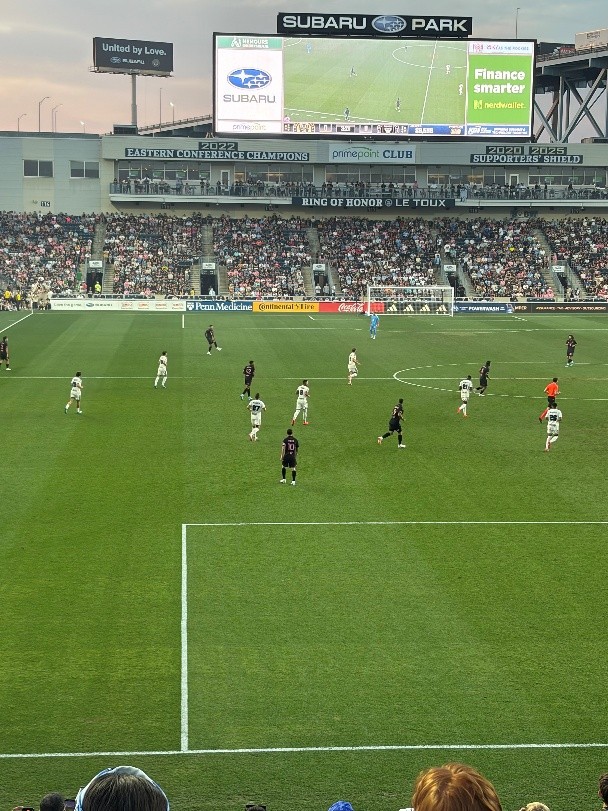
For Philadelphia fans, the evening showcased both the excitement surrounding their local club and the transformative effect Messi has had on American soccer. More broadly, it served as another reminder of how MLS has successfully positioned itself to capitalize on a rare convergence of factors: the arrival of the sport’s biggest superstar and the world’s largest sporting event being hosted in its own backyard. Together, they have helped propel the league to new heights and accelerated the growth of soccer across North America.