
By: Michael Shafkowitz
With Google’s continued efforts to consolidate campaign types within Ads in favor of AI-driven solutions, Google Display Ads (GDA) campaigns are the latest to be deprecated. Things happen quickly. Although it feels much longer, Demand Gen campaigns were introduced only two years ago, ushering in a new era of AI-powered advertising, originally replacing Discovery campaigns.
What to Expect?
Announced in late May following this year’s Google Marketing Live, the phase out of Display campaigns will happen by the end of the year. According to Google, advertisers will have until January of 2027 to migrate active campaigns to Demand Gen on their own. After January, advertisers will no longer be able to create new GDA campaigns with automatic campaign migration happening later in 2027.
To ease this transition, Google has introduced a new migration tool that is meant to help minimize impacts on performance. From Google, “This tool allows you to update live campaigns with performance history (dating back to 42 days) ported over. This minimizes learning time to approximately 1-2 days and avoids a “cold start”. This means, by using the migration tool, previous campaign learning will carry over to new Demand Gen campaigns, significantly reducing time spent in the learning phase.
What’s the Difference?
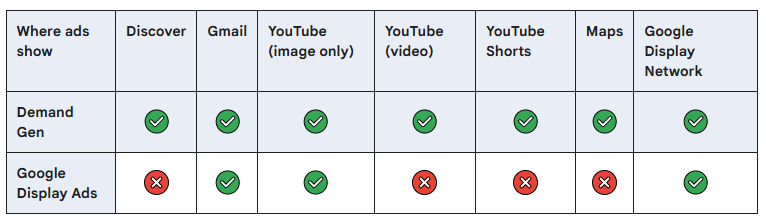
All campaigns migrating to Demand Gen will continue to maintain their existing settings; however, advertisers will gain access to a host of new controls and features. By upgrading to Demand Gen, users can unlock expanded inventory beyond the Google Display Network, including placements across YouTube, Gmail, Google Maps, and Discover through enhanced channel controls. Advertisers will also have access to a wider variety of creative formats, particularly video ads, providing greater flexibility in how they engage users.
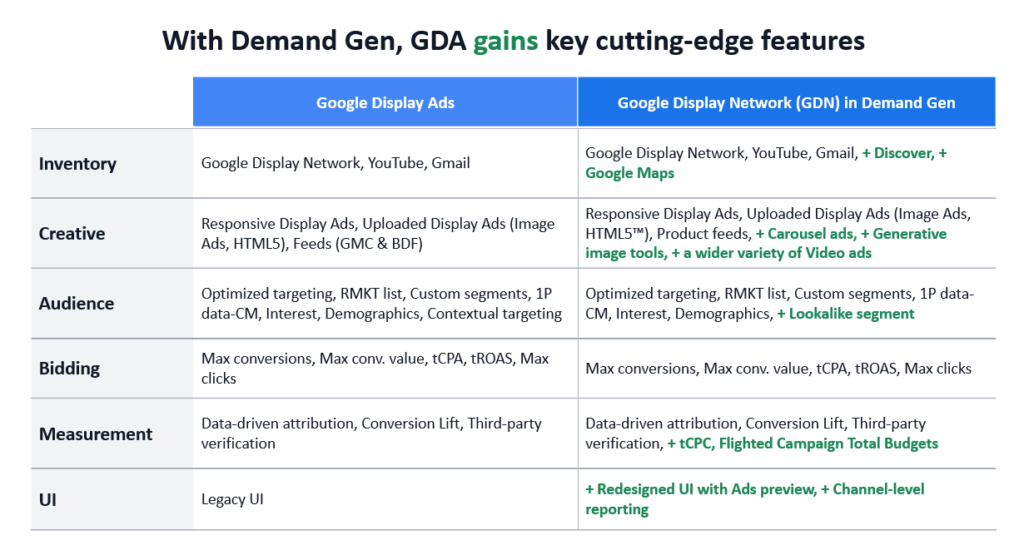
From a targeting perspective, advertisers can now utilize Lookalike segments, which are exclusive to Demand Gen campaigns. This helps them reach new, qualified users who share characteristics with their existing customers. Additionally, Demand Gen offers more granular reporting, with performance insights segmented by format, including In-Feed, Skippable In-Stream, and Shorts placements, providing greater visibility into campaign performance.
What Now?
MSM recommends getting ahead of this update to allow ample time for testing, learning, and optimizing against the new controls, inventory, and reporting capabilities available within Demand Gen.
As with any new campaign, we advise closely monitoring traffic and performance trends to ensure budget is spent as efficiently as possible. While Demand Gen introduces expanded inventory opportunities across Google properties, advertisers retain full control over channel selection and can continue to limit delivery to Display Network inventory if that best aligns with their objectives.
By embracing Demand Gen early, advertisers can position themselves to take full advantage of Google’s latest innovations while building a stronger foundation for future campaign growth and performance.